Old Bones: The Definitive Guide to 1950s Tattoo Typography
In the world of graphic design, few aesthetic movements carry as much raw energy and historical weight as the traditional American tattoo style. It is a visual language built on bold lines, high contrast, and an unapologetic sense of rebellion. For decades, this look has been synonymous with the inked skin of sailors, bikers, and rock-and-roll icons. Now, that same spirit has found a new home in digital typography through Old Bones. Proudly presenting Oldbone, a font inspired by 1950s tattoo studio culture, brings that classic ink vibe into modern design without losing its gritty soul.
Whether you are a seasoned designer looking to refresh a brand identity or a small business owner wanting to capture a vintage atmosphere, understanding the nuances of this typeface can transform your creative output. This guide explores what makes Old Bones unique, how it functions in real-world scenarios, and why it remains a powerful tool for those seeking to communicate attitude through lettering.
The Roots of Rebellion: Understanding the Aesthetic
To truly appreciate Old Bones, one must first understand the era that birthed it. The 1950s was a pivotal time for American tattoo culture. Studios were often dimly lit, filled with the smell of tobacco and ink, and operated on a code of honor and tradition. The lettering used in these spaces was not merely decorative; it was functional, designed to be read clearly from a distance and to stand out against the chaos of the street.
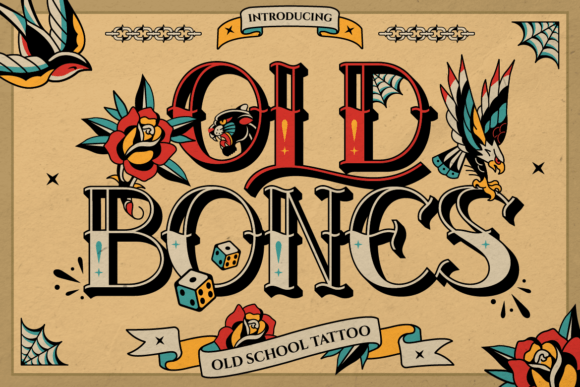
This font captures that specific moment in history. It mimics the hand-drawn quality of flash sheets—the pre-drawn designs pinned to the walls of old tattoo parlors. These letters were thick, blocky, and often featured dramatic shading to create depth. When you use Old Bones, you are tapping into a legacy of craftsmanship where every stroke mattered. It is more than just a collection of characters; it is a nod to a time when rebellion was worn on the sleeve, quite literally.
Characteristics That Define the Look
What sets Old Bones apart from other vintage-style fonts? The answer lies in its attention to detail and its commitment to the "American Traditional" style. Unlike modern sans-serifs that prioritize minimalism, this typeface embraces ornamentation and weight.
- Bold Strokes: The primary characteristic is the heavy, solid line weight. This ensures legibility even at smaller sizes, a necessity for tattoos on moving limbs.
- Dramatic Contrast: The interplay between thick downstrokes and thinner upstrokes creates a dynamic rhythm that draws the eye.
- Hand-Drawn Imperfections: Perfect symmetry can sometimes feel sterile. Old Bones incorporates subtle irregularities that mimic the human hand, adding warmth and authenticity.
- Depth and Shadow: With its specialized styles, the font offers a three-dimensional quality that makes text appear to pop off the page.
These elements combine to create a typeface that screams attitude. It is not shy or reserved; it demands attention. For designers, this means that using Old Bones immediately establishes a tone of confidence and strength.
Exploring the Styles: Regular vs. 3D
One of the most practical aspects of this typeface is its versatility, achieved through two distinct styles: Regular and 3D. Each serves a different purpose within a design hierarchy, allowing creators to build complex compositions without needing multiple font files.
The Regular Style: Foundation and Clarity
The Regular version of Old Bones is the workhorse of the family. It provides the clean, bold outline that defines the traditional look. This style is perfect for body copy in headlines, logo locks, or any situation where readability is paramount. Because it retains the classic ink aesthetic without excessive shading, it pairs exceptionally well with intricate illustrations or busy backgrounds. If you are designing a menu for a diner or a t-shirt graphic, the Regular style offers the necessary punch without overwhelming the viewer.
The 3D Style: Depth and Drama
For moments that require maximum impact, the 3D style steps in. By adding simulated shadows and extrusion, this variant makes the typography look bolder, more alive, and full of character. It mimics the way light hits raised ink or embossed metal, creating a tactile sensation even on a screen. This style is ideal for main titles, album covers, or poster headers where you want the text to dominate the visual field. However, like all strong tools, it should be used with intention. Overusing the 3D effect can clutter a design, so it is best reserved for focal points.
Real-World Applications: Where Old Bones Shines
The true value of a font is revealed in its application. While Old Bones was inspired by tattoo studios, its utility extends far beyond the parlor. Here are several scenarios where this typeface excels, helping businesses and creators stand out in crowded markets.
Clothing and Apparel Brands
Streetwear and vintage clothing brands often struggle to find a balance between trendiness and timelessness. Old Bones bridges this gap perfectly. Imagine a hoodie featuring a bold chest print or a baseball cap with embroidered lettering. The font's rugged texture complements cotton and denim, reinforcing the brand's connection to heritage and grit. For clothing lines targeting the rockabilly or punk subcultures, this typography is an instant signal of shared values.
Hospitality and Service Businesses
Barbershops, cafés, and breweries with a vintage concept benefit immensely from this aesthetic. A barbershop sign written in Old Bones immediately tells customers that they can expect a classic cut and a no-nonsense atmosphere. Similarly, a café serving espresso in a retro setting can use the font for chalkboard menus or window decals to enhance the immersive experience. The font acts as a silent ambassador, setting the mood before a customer even walks through the door.
Musical and Event Promotion
In the music industry, gig posters and album sleeves rely heavily on typography to convey genre and energy. Whether promoting a blues festival, a garage rock band, or a jazz night, Old Bones delivers the right amount of edge. Its ability to look "hand-painted" makes it ideal for limited-run merchandise like stickers and vinyl labels. In these contexts, the font doesn't just inform; it invites participation in a cultural movement.
Evaluating Suitability: Strengths and Considerations
While Old Bones is a powerful asset, it is not a universal solution. As with any design tool, understanding its limitations is crucial for successful implementation.
Strengths
The primary strength of this font is its emotional resonance. It instantly communicates a specific narrative—rebellion, history, and authenticity. For brands that need to establish a strong personality quickly, there are few better options. Additionally, the dual-style offering (Regular and 3D) provides flexibility that saves time in the design process. The high contrast also ensures excellent visibility, making it suitable for both large-scale signage and small-format applications like social media graphics.
Considerations and Limitations
However, the very traits that make Old Bones effective can also be drawbacks if misused. Because the font is so bold and stylized, it is generally unsuitable for long-form body text. Reading a paragraph in Old Bones would be fatiguing for the eye. It is strictly a display font, meant for headlines, logos, and short phrases.
Furthermore, the "attitude" of the font might clash with brands aiming for a soft, corporate, or ultra-modern minimalist image. If your brand message relies on subtlety, neutrality, or high-tech precision, Old Bones may feel too aggressive. It is essential to evaluate whether the rebellious spirit of the 1950s aligns with your current project goals.
Practical Expectations for Creators
When integrating Old Bones into a workflow, designers should anticipate the need for careful kerning. Due to the varying widths of the strokes, spacing can significantly alter the perceived weight of the text. Taking the time to adjust letter spacing manually will ensure the final result looks polished rather than haphazard. Additionally, while the 3D style is striking, pairing it with equally heavy imagery can lead to visual noise. Balancing the boldness of the font with negative space is key to maintaining a professional look.
Conclusion: More Than Just Letters
Ultimately, Old Bones is about more than just aesthetics; it is about storytelling. It allows creators to channel the spirit of a bygone era into contemporary projects, bridging the gap between past and present. Whether you are crafting a logo for a new tattoo studio, designing a sticker pack for an indie artist, or rebranding a local coffee shop, this font offers a unique voice that is hard to ignore.
By understanding its roots, mastering its two styles, and applying it with strategic intent, you can harness the power of traditional American tattoo culture to elevate your work. In a digital landscape often dominated by sleek, uniform typography, Old Bones stands as a testament to the enduring appeal of character, grit, and genuine rebellion. It is a tool for those who are not afraid to make a statement, proving that good design, like good ink, never truly fades.