Zyper: The Futuristic Typeface for High-Impact Digital Design
In a digital landscape saturated with rounded, friendly, and minimalist fonts, there is a distinct need for type that cuts through the noise with authority. Zyper answers this call as a bold, futuristic typeface engineered to evoke the precision of military-grade robotics and the high-stakes atmosphere of sci-fi warfare. It is not merely a collection of glyphs; it is a visual tool designed to communicate speed, technology, and power instantly. For designers, developers, and creative directors looking to establish a cyberpunk identity or a dystopian aesthetic, Zyper offers a unique geometric edge that transforms standard text into a statement.
The Anatomy of a Digital Weapon
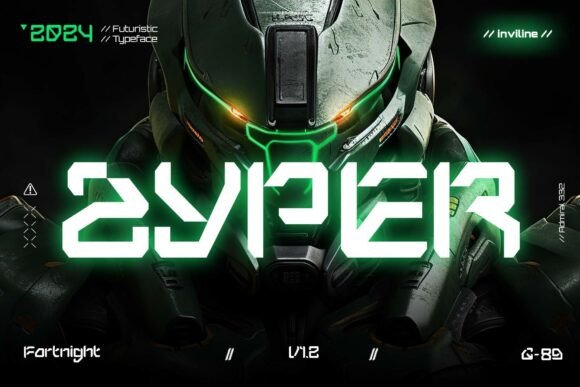
At its core, Zyper is defined by its sharp angles and aggressive geometric cuts. Unlike traditional sans-serifs that prioritize legibility through soft curves, Zyper embraces a digital harshness inspired by Heads-Up Display (HUD) systems found in advanced tactical gear. Every character is constructed with a sense of mechanical rigidity, mimicking the plating of an exoskeleton or the interface of a starship cockpit.
This design philosophy makes the font immediately recognizable. When you see Zyper, you don't just read words; you feel the context of a high-tech environment. The strokes are thick and commanding, yet they feature subtle interruptions and cutouts that suggest data transmission or holographic projection. This balance between solidity and digital fragility is what gives the typeface its distinctive "cyber" soul, making it perfect for projects where the narrative involves advanced technology, conflict, or future societies.
Revolutionizing Esports and Gaming Branding
The gaming industry is perhaps the most natural home for Zyper. In the competitive world of esports, team logos, tournament banners, and player overlays need to convey dominance and agility. A soft, corporate font simply does not resonate with an audience that values intensity and performance. Zyper provides the visual weight necessary to make a team name stand out on a jersey or a stream overlay.
Consider a scenario where an esports organization is rebranding. They want to move away from a generic look to something that feels like a specialized unit. By applying Zyper to their logo, the brand instantly adopts a militaristic, elite persona. The sharp angles of the font mirror the quick reflexes required in gameplay, while the futuristic style aligns with the virtual nature of the competition. Furthermore, in game title screens, Zyper can serve as the anchor for the entire visual identity, setting the tone before a single level is played. It tells the player that they are entering a world of strategy, combat, and high-octane action.
Sci-Fi Posters and Dystopian Narratives
Beyond interactive media, Zyper is a powerhouse for static storytelling, particularly in poster design for science fiction films, novels, or theatrical productions. The genre often relies on visual shorthand to establish a setting, and typography is a critical component of that shorthand. When designing a poster for a movie set in a neon-drenched, rain-soaked metropolis, the choice of font dictates the mood.
Using Zyper allows designers to bypass the need for excessive imagery to convey the "future." The font itself carries the weight of the setting. Imagine a movie poster where the title is rendered in Zyper, glowing against a dark background with a slight glitch effect. The result is an immediate immersion into a dystopian reality. The font's inherent tension—between structure and decay—perfectly mirrors the themes often explored in cyberpunk narratives. It works exceptionally well for promotional materials that need to grab attention in a crowded marketplace, whether that is a physical cinema lobby or a social media feed.
Tech Gear Packaging and Product Identity
The utility of Zyper extends into the physical realm of product design, specifically for tech gear packaging. Consumers purchasing high-end peripherals, such as mechanical keyboards, gaming mice, or VR headsets, are often looking for a sense of cutting-edge performance. The packaging is the first point of contact, and it must promise quality and innovation.
Brands that use Zyper on their boxes signal that their products are built for serious users. The industrial aesthetic of the font suggests durability and precision engineering. For example, a line of tactical earbuds or ruggedized smartphones could leverage Zyper to differentiate itself from competitors using softer, lifestyle-oriented branding. The font implies that the device inside is a tool, a piece of equipment ready for deployment, rather than just a consumer gadget. This psychological cue helps justify premium pricing and builds trust with an audience that values technical specifications over marketing fluff.
User Interfaces and HUD Systems
For UI/UX designers working on applications that require a specific thematic atmosphere, Zyper offers a functional yet stylistic solution. While body text usually requires high legibility at small sizes, headers, status indicators, and key metrics within a themed application can benefit greatly from Zyper's distinct character.
Imagine a dashboard for a cryptocurrency trading platform or a simulation game for flight training. Using Zyper for the main data points creates a cohesive experience that feels integrated and purpose-built. It reinforces the idea that the user is interacting with a sophisticated system. However, it is important to note that due to its decorative nature, Zyper should be used selectively in interfaces. It shines best when highlighting critical information or defining sections, rather than for long-form reading. This strategic placement ensures that the interface remains usable while maintaining the desired futuristic aesthetic.
Practical Considerations Before Implementation
While Zyper is a versatile and impactful typeface, it is not a universal solution. Its strength lies in its aggression and stylization, which means it requires careful handling. One of the primary considerations is readability. Because of the sharp angles and potential for complex internal shapes, Zyper may struggle when scaled down too small or used for large blocks of text. It is best reserved for headlines, titles, and short phrases where impact is more important than prolonged reading comfort.
Another factor is the emotional tone. Zyper is inherently intense. It conveys power, danger, and technology. Using it for a project that aims to be warm, organic, or comforting would create a dissonance that confuses the audience. Designers must ensure that the font aligns with the brand's voice. If the goal is to appear approachable and human-centric, Zyper might be too cold and mechanical.
Additionally, pairing Zyper with other typefaces requires thought. Since it is so dominant, it needs a neutral partner to balance it out. A clean, simple sans-serif or a monospaced font works well for body text, allowing Zyper to do its job as the headline without creating visual clutter. The contrast between the heavy, angular Zyper and a lighter, simpler secondary font creates a hierarchy that guides the viewer's eye effectively.
Maximizing Visual Impact
To truly harness the power of Zyper, designers should experiment with effects that complement its robotic origins. Glitch effects, neon glows, and metallic gradients can enhance the futuristic feel. The font's geometric cuts provide natural spaces for light leaks or digital artifacts, making it highly responsive to post-processing. In motion graphics, animating the individual segments of the letters to assemble or disassemble can add a layer of dynamism that static images cannot achieve.
Ultimately, Zyper is more than a font choice; it is a strategic decision to position a brand or project within the realm of the advanced and the bold. Whether you are building a new esports team, designing a sci-fi novel cover, or packaging the next generation of tech gear, this typeface offers a unique language of visual impact. By understanding its strengths and limitations, creators can wield Zyper as a precise instrument to shape perception and define the future of their designs.