Whops: The Bold Graffiti Bubble Display Font for Urban Design
In the rapidly evolving landscape of digital and print typography, few styles manage to capture the raw energy of street culture quite like the bubble display font known as Whops. This typeface is not merely a collection of characters; it is a visual statement that brings the chaotic yet harmonious spirit of urban art directly into professional design workflows. For creators seeking to inject attitude, creativity, and bold visual impact into their projects, Whops offers a unique solution that bridges the gap between traditional calligraphy and modern graphic design. Its rounded, playful, and dynamic letterforms are specifically engineered to resonate with audiences who value authenticity and edginess in visual communication.
The Anatomy of Urban Expression
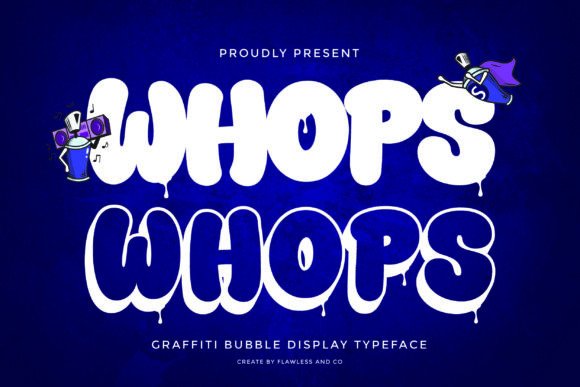
To understand why Whops stands out in a crowded market of decorative fonts, one must first examine its structural composition. Unlike standard sans-serif or serif typefaces designed for legibility at small sizes, Whops is a display font intended to dominate the visual hierarchy. The defining characteristic of this typeface is its "bubble" aesthetic, where letters are inflated with volume and weight, creating a sense of three-dimensionality even in flat applications. These rounded forms mimic the spray paint cans used by graffiti artists, evoking the texture and flow of aerosol ink hitting a brick wall.
The dynamic nature of Whops comes from its intentional irregularities. While many fonts strive for perfect geometric consistency, Whops embraces the organic imperfections found in hand-painted murals. The letterforms vary slightly in thickness, tilt, and curvature, preventing the text from feeling static or robotic. This variability is crucial for conveying the human element of street art. When a designer selects Whops, they are choosing a font that feels alive, as if it were just painted moments ago. The interplay between the heavy strokes and the open counter spaces creates a rhythm that guides the eye across the page, making it an excellent choice for headlines and short phrases where impact is more important than dense readability.
Visual Weight and Spatial Dynamics
A critical aspect of using Whops effectively involves understanding how its visual weight interacts with negative space. Because the letters are so bold and rounded, they occupy a significant amount of visual real estate. In a layout, Whops acts as an anchor, drawing immediate attention. However, this strength requires careful management. If paired with too much other text or placed in a cluttered environment, the font can become overwhelming. The key to mastering Whops lies in giving it room to breathe. By surrounding the typeface with ample white space, designers can enhance its playful nature and ensure that the message remains clear despite the stylistic complexity.
Furthermore, the internal shapes of the letters—the counters—play a vital role in the font's overall character. In Whops, these spaces are often large and exaggerated, contributing to the "bubbly" feel. This openness allows for creative manipulation, such as inserting background images through the letters or applying gradients and textures within the glyphs themselves. Such techniques can transform a simple headline into a complex piece of artwork, demonstrating the versatility of the typeface beyond standard text rendering.
Strategic Applications Across Industries
The versatility of Whops extends far beyond the confines of street art galleries. Its ability to convey excitement and modernity makes it suitable for a wide array of industries looking to connect with younger demographics or project a rebellious brand image. From fashion to music, and from education to digital marketing, the applications for this bold display font are diverse and impactful.
- Streetwear and Fashion Branding: In the world of apparel, typography is often the primary logo. Brands utilizing Whops can instantly communicate a connection to urban culture. Imagine a hoodie featuring a large, bubbly logo in high-contrast colors; the font transforms the garment into a wearable statement piece. The playful nature of the letters aligns perfectly with the casual, expressive ethos of streetwear.
- Music Album Covers and Event Posters: The music industry has long been intertwined with graffiti culture. Whops is an ideal choice for album covers, particularly for genres like hip-hop, rap, pop, and electronic dance music. The font's energy mirrors the rhythm and intensity of the music. Similarly, event posters for concerts or festivals benefit from the font's ability to grab attention from a distance, ensuring that event details are noticed immediately.
- Digital Interfaces and Social Media: In the digital realm, where attention spans are short, Whops serves as a powerful tool for engagement. It works exceptionally well in social media graphics, YouTube thumbnails, and website hero sections. The rounded edges of the font soften the harshness of digital screens while maintaining a bold presence that cuts through the noise of endless scrolling feeds.
- Educational Materials for Youth: Educators and content creators targeting children and teenagers can use Whops to make learning materials more engaging. A worksheet or presentation slide featuring this font can feel less like a chore and more like a fun activity. The approachable, non-threatening nature of the bubble letters helps to lower barriers to entry for students who might otherwise find academic content intimidating.
Case Study: Transforming Brand Identity
Consider a hypothetical scenario involving a local coffee shop aiming to rebrand itself to attract a younger, trend-conscious crowd. Previously, the shop used a traditional serif font that felt outdated and formal. By switching to Whops for their main signage and menu headers, the business instantly shifted its perception. The new typography suggested a relaxed, creative atmosphere where community and self-expression were valued. The change did not require altering the physical space significantly; the power of the font alone was enough to redefine the brand's voice. This example illustrates how Whops can serve as a catalyst for broader marketing strategies, helping businesses pivot their identity without a complete overhaul of their product offerings.
Navigating Design Challenges and Best Practices
While Whops offers immense creative potential, it is not without its limitations. As a display font, it is not designed for body text or long paragraphs. Attempting to write a full article or a detailed legal disclaimer in Whops would result in poor readability and visual fatigue. The intricate shapes and varying widths of the letters make them difficult to decipher when set in small sizes or tight leading. Therefore, the most effective use of this typeface is reserved for headlines, titles, logos, and short slogans.
Color selection is another critical consideration when working with Whops. Because the font is so bold, it pairs best with high-contrast color combinations. Neon greens against black, electric blues on white, or vibrant oranges on dark grey can maximize the font's impact. Conversely, using low-contrast colors or placing the font over busy backgrounds can diminish its effectiveness. Designers should experiment with layering effects, such as drop shadows or outlines, to ensure the text remains legible regardless of the background complexity.
Pairing with Complementary Typefaces
To create a balanced typographic hierarchy, Whops needs to be paired with a more neutral, readable font for supporting text. Clean sans-serif fonts, such as Helvetica, Roboto, or Open Sans, work exceptionally well alongside Whops. The stark contrast between the playful, organic shapes of Whops and the geometric precision of a standard sans-serif creates a dynamic tension that keeps the design interesting. This combination allows the headline to scream for attention while the body text quietly delivers the necessary information. Avoid pairing Whops with other decorative or script fonts, as this can lead to visual chaos and confuse the viewer about the primary message.
The Cultural Resonance of Street Art Typography
Beyond its practical applications, Whops taps into a deeper cultural narrative. Street art has evolved from a form of vandalism to a recognized and celebrated art form, influencing everything from high fashion to corporate advertising. Fonts like Whops play a pivotal role in this evolution by democratizing access to the aesthetic of graffiti. They allow designers who may not have the skills to create custom hand-lettered pieces to still incorporate the spirit of urban culture into their work.
This democratization is significant for small business owners and independent creators who lack the budget for custom illustration but still need to stand out in a competitive market. By using Whops, these individuals can project an image of innovation and cultural awareness. The font serves as a shorthand for values like freedom, creativity, and rebellion, allowing brands to align themselves with these ideals without needing to engage in controversial behavior. It is a safe yet authentic way to borrow from the streets and bring that energy into mainstream design.
Future Trends in Digital Typography
Looking ahead, the popularity of fonts like Whops suggests a continued shift towards more expressive and personality-driven typography in digital spaces. As virtual reality, augmented reality, and interactive web experiences become more common, the need for fonts that can convey emotion and movement will only grow. Whops, with its inherent dynamism, is well-positioned to thrive in these emerging environments. Imagine a 3D-rendered version of Whops floating in a virtual showroom or animating across a screen in response to user interaction. The possibilities are vast, and the foundational design of the font provides a strong base for such innovations.
Ultimately, Whops represents more than just a style choice; it is a tool for storytelling. It allows designers to communicate tone, mood, and context before a single word is read. Whether used for a global marketing campaign or a local community poster, this bold graffiti bubble display font continues to prove that typography can be a powerful vehicle for cultural expression. By understanding its characteristics, respecting its limitations, and leveraging its strengths, creators can harness the full potential of Whops to make their designs unforgettable.