The Romeind: A Structured Display Font with Theatrical Alternates
In the crowded landscape of digital typography, finding a typeface that balances legibility with distinct personality is often a challenge. Designers frequently face a binary choice: select a clean, utilitarian font that communicates information efficiently but lacks character, or choose an ornate display typeface that captures attention but sacrifices readability at smaller sizes. The Romeind emerges as a compelling solution to this dilemma, offering a hybrid approach that merges structured regular characters with flowing, swash-heavy alternates. This unique combination makes it a versatile asset for professionals seeking to inject rhythm and visual interest into their work without compromising on clarity.
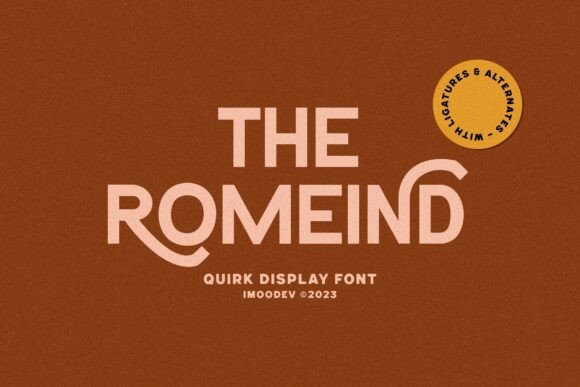
At its core, The Romeind is designed to function as a robust display font. Its primary value lies in the duality of its character set. The standard glyphs are crafted with clean lines and a structured geometry, ensuring that even when used in slightly larger body text or subheadings, the message remains accessible. However, the true potential of the font unlocks when the alternate characters are engaged. These variants feature extended swashes and fluid extensions that introduce a theatrical flair, transforming static text into a dynamic visual element. For marketers, editors, and brand creators, this flexibility provides a powerful tool for hierarchy and emphasis within a single typographic family.
Design Philosophy and Structural Integrity
Understanding the mechanics behind The Romeind reveals why it stands out among contemporary display fonts. The design philosophy appears rooted in the belief that structure and ornamentation can coexist harmoniously. The regular characters serve as the anchor; they possess a high x-height and open apertures, which are critical for maintaining excellent readability. This structural integrity ensures that the font does not feel fragile or overly decorative when viewed from a distance or on lower-resolution screens.
Conversely, the alternate characters act as the creative engine. These are not merely decorative add-ons but integral components of the typeface's identity. The swashes and extensions are carefully weighted to match the stroke thickness of the regular characters, preventing them from looking like afterthoughts. Instead, they flow naturally from the letterforms, creating a sense of movement and rhythm. This attention to detail suggests a high level of craftsmanship, making The Romeind suitable for projects where quality and aesthetic consistency are paramount. The font avoids the common pitfall of "over-design," where excessive ornamentation distracts from the content, by keeping the alternates optional and context-dependent.
Practical Applications in Branding and Editorial
The versatility of The Romeind becomes most apparent when examining its real-world applications. Its ability to shift between professional and playful tones makes it particularly effective for lifestyle brands and boutique businesses. Consider a magazine cover or an album sleeve; these mediums require a headline that grabs immediate attention while conveying the specific mood of the content. Using the regular characters for the main title ensures the subject matter is clear, while selectively applying swash alternates to key letters adds a layer of sophistication and artistic flair.
- Lifestyle Brands: For companies selling handcrafted goods or curated experiences, The Romeind offers a way to communicate quality and uniqueness. The font's theatrical touch aligns well with brands that position themselves as artisanal or exclusive.
- Editorial Design: In magazines and newsletters, the font excels in section headers and pull quotes. The clean regulars maintain editorial standards, while the alternates provide visual breaks that guide the reader's eye through the layout.
- Boutique Packaging: On product labels, space is often limited. The structured nature of the regular characters allows for compact usage, while a single swashed initial can elevate the perceived value of the packaging.
- Logos and Identity: While display fonts can be risky for full-logos due to scalability issues, The Romeind works exceptionally well for wordmarks where the brand name is short. The alternates allow for custom ligatures and connections that create a cohesive, bespoke look.
For freelancers and small business owners, the practical value extends beyond aesthetics. Having a single font file that can handle both functional and decorative roles streamlines the design workflow. There is no need to pair two different typefaces to achieve contrast, reducing the risk of clashing styles and simplifying file management for web and print production.
Evaluating Usability and Flexibility
When assessing a typeface for long-term use, usability is just as important as visual appeal. The Romeind demonstrates strong performance in terms of flexibility. The availability of multiple alternates means that designers are not locked into a single style. They can mix and match characters to create unique combinations tailored to specific projects. This customization capability is essential for creatives who need to ensure their work stands out in saturated markets.
However, the effectiveness of the font relies heavily on the user's ability to apply the alternates judiciously. The swashes and extensions are bold statements; overusing them can lead to visual clutter and reduce the overall impact. It is recommended to use the alternate characters sparingly, perhaps only on the first letter of a headline or to emphasize a specific keyword. This restraint preserves the elegance of the design and maintains the readability that the regular characters provide.
From a technical standpoint, the font appears reliable across various media. The clean construction of the regular glyphs suggests good performance on screen, while the weight and stroke variation indicate suitability for high-quality print. For publishers and educators producing materials that require both engagement and clarity, The Romeind offers a balanced solution. It bridges the gap between the rigid formality of traditional serif fonts and the chaotic energy of modern script fonts, providing a middle ground that feels both contemporary and timeless.
Limitations and Strategic Considerations
No typeface is universally applicable, and The Romeind has its own set of limitations that users should consider. Due to its display nature, it is not ideal for long-form body copy. The intricate details of the alternates and the stylistic weight of the regular characters may become difficult to read at small point sizes or in dense paragraphs. It is best reserved for headlines, titles, logos, and short phrases where the text is the focal point.
Additionally, the theatrical style may not suit every brand voice. Industries that rely on strict minimalism or ultra-modern sans-serif aesthetics might find the swashes and extensions too ornamental. The font carries a certain warmth and personality that could clash with sterile or highly corporate environments. Therefore, before integrating The Romeind into a project, it is crucial to evaluate whether the brand's tone aligns with the font's playful yet structured character.
Another consideration is the learning curve associated with utilizing the alternates effectively. Designers familiar with OpenType features will find this intuitive, but those less experienced may need to experiment to understand how to balance the regular and alternate forms. The power of the font lies in this customization, but it requires a thoughtful approach to avoid a disjointed appearance.
Long-Term Value for Creative Professionals
For serious hobbyists, entrepreneurs, and established design agencies, investing in a versatile typeface like The Romeind offers significant long-term value. In a digital environment where content needs to be refreshed regularly, having a font that can adapt to different moods and contexts reduces the need to constantly search for new assets. The ability to create fresh, engaging headlines with a single font family increases efficiency and maintains brand consistency across various platforms.
Furthermore, the font's unique blend of structure and flair positions it well for evolving design trends. As audiences increasingly crave authenticity and human connection in digital spaces, the handcrafted feel of The Romeind's alternates resonates with current preferences for personalized and artisanal aesthetics. It serves as a reliable tool for creators who want to produce work that feels intentional and crafted rather than generic and automated.
Ultimately, The Romeind is more than just a collection of letterforms; it is a strategic resource for communication. By combining the reliability of clean, readable characters with the expressive potential of flowing alternates, it empowers designers to tell stories with greater nuance. Whether for a boutique packaging project, a striking magazine cover, or a memorable logo, this font provides the necessary tools to make a lasting impression. For professionals aged 20 to 50 navigating the complexities of modern visual communication, The Romeind represents a practical, high-quality addition to any creative toolkit.