Rustic Changer: A Distinctive Typeface for Artisanal and Rugged Design Projects
Understanding the Unique Appeal of Rustic Changer
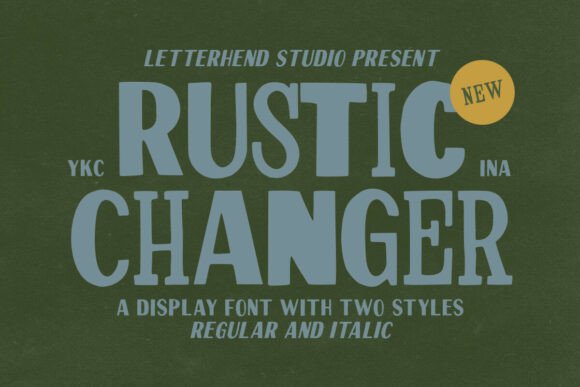
The Rustic Changer font, crafted by Letterhend Studio, stands out as a bold and expressive typeface designed to evoke the charm of hand-drawn signage and vintage craftsmanship. Its blocky, textured appearance gives it a grounded, weathered look that feels both nostalgic and authentic. Unlike many digital fonts that lean toward clean precision, Rustic Changer embraces irregularities—its edges are rough, its forms are organic, and its character is unmistakably human.
Offered in two distinct styles—Regular and Italic—this font gives designers the flexibility to switch between a stable, static presence and a more dynamic, slanted energy. The Italic version, while maintaining the same rugged texture, introduces a sense of motion and urgency, making it ideal for headers or accent text that needs to stand out without losing thematic consistency.
How Rustic Changer Fits Into the Broader Landscape of Display Fonts
In the world of display fonts, especially those aimed at rustic or heritage branding, there are several categories: distressed, handwritten, slab serif, and block-style. Rustic Changer belongs to the latter group, but it differentiates itself by combining the structural clarity of block letters with the tactile appeal of hand-carved wood or weathered signage.
Compared to more refined slab serifs, which often convey strength and professionalism, Rustic Changer leans into a more organic, imperfect aesthetic. This makes it less suitable for formal branding but highly effective for niche markets like artisanal goods, outdoor gear, or craft beverages where authenticity and a sense of history are key selling points.
It also differs from distressed or grunge-style fonts that rely heavily on texture overlays and fragmented letterforms. While those fonts can sometimes feel overwhelming or overly stylized, Rustic Changer maintains a balance—its structure remains legible even at smaller sizes, and its character is expressive without being distracting.
Strengths and Practical Applications of Rustic Changer
One of the most notable strengths of Rustic Changer is its versatility within its intended niche. It performs exceptionally well in branding contexts that aim to evoke a sense of ruggedness and craftsmanship. Whether you're designing a logo for a woodshop, a label for a small-batch beer, or a header for a nature-inspired blog, this font brings a strong visual identity that feels both intentional and rooted in tradition.
- High contrast and bold silhouette ensures readability even in stylized applications.
- Hand-drawn texture adds warmth and personality without compromising clarity.
- PUA encoding allows easy access to special characters and decorative elements, making it user-friendly for designers working in various software environments.
Its two available styles—Regular and Italic—also make it adaptable for multi-layered designs. For example, a logo might use the Regular style for the main brand name and the Italic for a tagline or secondary text, creating visual hierarchy without straying from the overall theme.
Tradeoffs and Considerations
While Rustic Changer excels in specific design scenarios, it's important to recognize its limitations. Due to its textured and blocky nature, it's not ideal for long-form text or applications requiring fine detail. Body copy or interface text would quickly become fatiguing to read in this typeface.
Additionally, because of its strong stylistic identity, Rustic Changer may not be the best fit for brands aiming for a more minimalist or contemporary aesthetic. It carries a strong visual voice that can dominate a design if not balanced carefully with simpler, more neutral typefaces in supporting roles.
Designers should also be mindful of how they pair Rustic Changer with other design elements. While its rugged charm works well with earthy tones, natural textures, and vintage motifs, overuse of distressed effects or competing fonts can lead to a cluttered or inconsistent look.
When Rustic Changer Is the Right Choice
Rustic Changer shines in projects that aim to convey authenticity, strength, and a connection to tradition. It’s particularly well-suited for:
- Branding for craft industries such as microbreweries, artisan coffee roasters, and handmade goods.
- Outdoor and adventure-related design including gear branding, hiking apparel, or nature retreats.
- Small business logos that want to project a sense of heritage and personal touch.
- Social media headers and promotional graphics where visual impact and thematic consistency are key.
In these contexts, Rustic Changer’s character-driven design becomes an asset rather than a limitation. It helps establish a visual identity that feels rooted in real-world craftsmanship and storytelling.
When to Consider Alternatives
Despite its strengths, Rustic Changer may not be the best fit for every project. If your design goals lean toward modern minimalism, high-tech branding, or international accessibility, you may want to explore cleaner, more neutral typefaces that offer broader adaptability.
Similarly, if your design requires extensive body text or multilingual support beyond the PUA-encoded glyphs included in Rustic Changer, you might consider pairing it with a more functional font family or opting for a different display font that better suits your content needs.
Designers working in sectors like finance, healthcare, or technology—where clarity, professionalism, and neutrality are often prioritized—would likely find more appropriate options in sans-serif or serif typefaces that emphasize legibility and consistency over character and texture.
Practical Design Tips for Using Rustic Changer
To get the most out of Rustic Changer, consider the following design strategies:
- Pair with simpler fonts to create balance. Use a clean sans-serif for supporting text to ensure readability and contrast.
- Incorporate textured backgrounds or natural elements like wood grain, stone, or fabric to enhance the font’s rustic appeal.
- Limit color palettes to earthy tones—forest green, burnt umber, slate gray, and deep red—to reinforce the vintage, grounded aesthetic.
- Use spacing intentionally. Rustic Changer benefits from generous letter and line spacing, which helps maintain legibility and visual impact.
By thoughtfully integrating Rustic Changer into your design system, you can create visuals that feel both timeless and contemporary—rooted in tradition but relevant to modern audiences.
Making an Informed Choice
Choosing a typeface like Rustic Changer involves more than just aesthetics—it's about aligning your design with the message you want to convey. If your brand or project thrives on authenticity, craftsmanship, and a tactile connection to the past, Rustic Changer is a compelling option that offers both visual impact and emotional resonance.
However, as with any design decision, it’s important to consider the broader context. Evaluate your audience, your industry, and your long-term brand goals before committing to a typeface. Rustic Changer may be the perfect fit for a heritage-inspired brand, but it may not serve a sleek, digital-forward identity as effectively.
Ultimately, the best typeface is the one that supports your message while enhancing your visual identity. Rustic Changer offers a distinctive voice in the world of display fonts, and for the right project, it can be the difference between a design that blends in and one that truly stands out.