Dooca: The Playful Power of Imperfect Typography
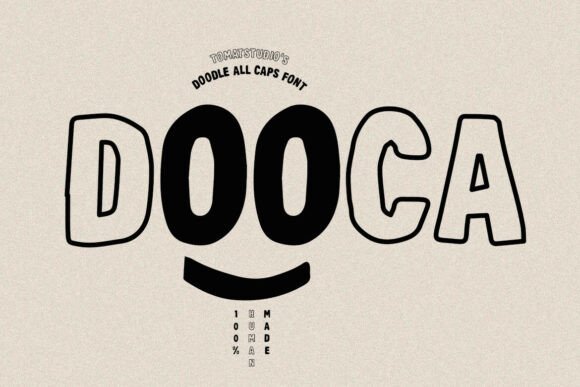
In a digital landscape often dominated by sleek, geometric sans-serifs and rigidly structured typefaces, there is a growing hunger for something that feels human. Designers are increasingly seeking fonts that break the mold of perfection to inject warmth, personality, and a touch of whimsy into their projects. Enter Dooca, a typeface that celebrates the charm of the hand-drawn. With its all-caps character set and rounded, slightly irregular strokes, Dooca evokes the casual, doodle-like feel of a sketch made with a chunky marker. It is not just a font; it is a stylistic choice that signals friendliness, approachability, and genuine creativity.
The Aesthetic of Intentional Imperfection
What sets Dooca apart from other display fonts is its commitment to an aesthetic of intentional imperfection. In traditional typography, consistency is king. Every letter must align perfectly, every curve must be mathematically precise. However, Dooca flips this script. Its letters possess a charmingly imperfect quality, as if they were sketched in a moment of inspiration rather than engineered on a grid. This lack of precision is not a flaw; it is the defining feature that gives the typeface its soul.
When you look closely at the character set, you notice the subtle variations in stroke width and the soft, rounded terminals. These elements mimic the natural movement of a hand holding a thick marker or a brush pen. The result is a visual texture that feels organic and tactile. In a world where screens can sometimes feel cold and sterile, Dooca brings a sense of physicality to the digital space. It reminds viewers of childhood notebooks, whiteboard brainstorming sessions, and the joy of creating something by hand.
Why All-Caps Matters in Modern Design
One of the most distinct characteristics of Dooca is its exclusive use of uppercase letters. While some might view an all-caps font as limiting, it actually serves a specific and powerful function in modern design. Uppercase letters command attention without the need for shouting. They create a bold, blocky presence that works exceptionally well for headlines, logos, and short phrases where impact is more important than readability in long paragraphs.
The uniform height of the characters in Dooca creates a strong horizontal rhythm. This makes it ideal for banners, signage, and social media graphics where quick recognition is key. Because the font relies on shape and form rather than the ascenders and descenders found in lowercase text, it stands out even at smaller sizes or when viewed from a distance. The playful nature of the strokes ensures that this boldness doesn't come across as aggressive; instead, it remains inviting and fun.
Versatility Through Solid and Outline Styles
A major factor contributing to the widespread appeal of Dooca is its versatility. The font family comes in two primary styles: a solid, filled version and a distinctive outline style. This dual offering provides designers with significant flexibility, allowing them to adapt the font to various design needs without losing its core personality.
The solid version of Dooca is perfect for high-contrast applications. When placed against a light background, the thick, filled strokes create a heavy, impactful statement. It is excellent for children's book covers, event posters, and branding for creative agencies that want to project confidence and playfulness simultaneously. The weight of the solid letters ensures legibility while maintaining that friendly, marker-drawn vibe.
Conversely, the outline style opens up a world of creative possibilities. Outlines allow for layering and color manipulation that solid fonts cannot achieve. You can fill the interior of the outlined letters with gradients, patterns, photographs, or textures, effectively turning the text into a canvas itself. This style is particularly useful for logo design, where integrating the brand name with other graphic elements is essential. It also works beautifully for overlay effects on busy backgrounds, ensuring the text remains visible without overpowering the image beneath it.
Combining Styles for Dynamic Effects
Savvy designers often combine both the solid and outline versions of Dooca within a single project to create depth and hierarchy. For instance, a headline might use the solid version for emphasis, while a sub-headline uses the outline style to provide a softer counterpoint. Alternatively, placing a solid letter inside an outline of the same letter can create a "drop shadow" effect that adds dimension without needing complex vector editing software. This interplay between the two styles allows for dynamic compositions that capture the eye and keep the viewer engaged.
Fitting Dooca Into Modern Workflows
Incorporating a font like Dooca into your design workflow requires a shift in mindset. It is not a workhorse font meant for body copy or technical documentation. Instead, it is a specialty tool reserved for moments where you need to communicate emotion, tone, or a specific brand identity. Understanding where and how to deploy Dooca is crucial for maximizing its impact.
Branding and Identity: Startups and small businesses looking to establish a friendly, community-focused brand often turn to Dooca. Think of a local bakery, a toy store, a pet grooming salon, or a creative workshop. These industries benefit from a logo that feels accessible and non-corporate. Dooca’s warm personality helps build an immediate emotional connection with the target audience, signaling that the business is approachable and human-centric.
Digital Media and Social Content: The rise of social media has created a demand for content that stops the scroll. Standard fonts often get lost in the feed, but the unique, hand-drawn aesthetic of Dooca cuts through the noise. It is perfect for Instagram stories, YouTube thumbnails, and blog headers. The font’s casual feel aligns well with the informal, authentic tone of much online content today.
Print and Packaging: On physical products, Dooca shines on packaging designed for kids, snacks, or lifestyle goods. The font suggests that what is inside is fun, simple, and enjoyable. It works well on stickers, t-shirts, and tote bags, items that often rely on bold, graphic statements. The irregular strokes add a tactile quality that encourages people to touch and interact with the product.
Practical Considerations for Adoption
While Dooca offers immense creative potential, there are practical considerations to keep in mind before adopting it for a project. First and foremost, legibility is paramount. Because the font is stylized and features irregular strokes, it should generally be avoided for long blocks of text. Extended reading can become difficult due to the lack of lowercase distinction and the varying stroke weights. Stick to headlines, titles, and short captions where the font can shine without compromising readability.
Another factor is context. Dooca is inherently playful and lighthearted. Using it for serious, formal, or somber subjects—such as legal documents, medical reports, or financial news—would be inappropriate and could undermine the message. The font carries a specific emotional weight, and that weight must align with the content it supports. If your goal is to convey authority, stability, or seriousness, a more traditional serif or geometric sans-serif might be a better fit.
Color usage is also a critical element when working with Dooca. The rounded, chunky strokes react differently to various color combinations. High-contrast pairings, such as black on yellow or navy on white, tend to work best, ensuring the details of the strokes remain clear. When using the outline style, the choice of fill color becomes even more important, as it defines the overall mood of the design.
Pairing Dooca with Other Typefaces
To create a balanced design, pairing Dooca with a complementary typeface is often necessary. Since Dooca is so expressive, it pairs best with neutral, clean fonts that don't compete for attention. A simple, geometric sans-serif like Helvetica, Roboto, or Open Sans works wonders. These fonts provide a stable foundation for body text, allowing Dooca to take center stage in headings without creating visual chaos. The contrast between the rigid precision of the supporting font and the loose, hand-drawn nature of Dooca creates a dynamic tension that is visually appealing and easy to navigate.
Cultivating a Whimsical Tone
Ultimately, the decision to use Dooca is a decision about tone. In a market saturated with polished, algorithmically generated designs, the "chunky marker" aesthetic of Dooca feels refreshing and authentic. It invites the viewer to relax, smile, and engage with the content on a more personal level. Whether you are designing a logo for a new eco-friendly toy line, creating a header for a travel blog about hidden gems, or crafting a poster for a neighborhood festival, Dooca provides the perfect vehicle to express a whimsical, lighthearted spirit.
The font’s unique character lies in its refusal to be perfect. It embraces the quirks and idiosyncrasies of human creation, making it a powerful tool for brands and individuals who want to stand out by being genuinely themselves. By choosing Dooca, you are signaling that your project values creativity over conformity and warmth over rigidity. In the ever-evolving world of design, that kind of authenticity is worth its weight in gold.