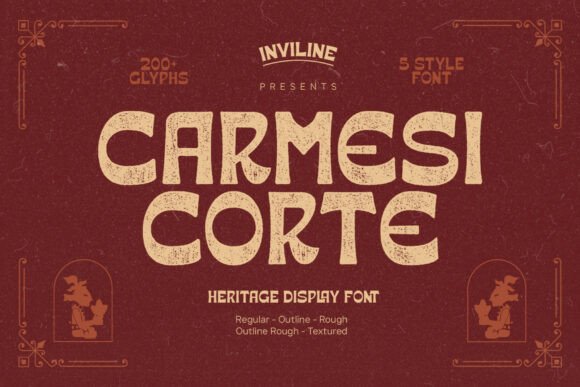
Carmesi Corte: A Guide to Mastering This Heritage Display Font
When you encounter a typeface that feels like it was carved by hand centuries ago, it is easy to get swept up in the aesthetic and overlook the practicalities of implementation. Carmesi Corte is exactly that kind of font—a bold heritage display typeface inspired by ancient Latin engravings, medieval crafts, and folkloric visual traditions. Its slightly irregular, hand-chiseled look radiates a rustic charm that bridges the gap between vintage authenticity and modern artisanal design. However, treating such a character-rich font as a simple drop-in replacement for standard text can lead to design failures that undermine your project's credibility.
The appeal of Carmesi Corte lies in its ability to convey warmth, culture, and character instantly. Whether you are designing a logo for a craft brewery, packaging for organic food products, or ceremonial prints for a cultural event, this font offers a distinct voice. Yet, many designers and business owners make the mistake of assuming that because a font looks "authentic," it works everywhere. Understanding the specific strengths and limitations of Carmesi Corte is essential to ensuring your final output is both visually stunning and functionally effective.
The Trap of Overusing Decorative Typography
One of the most common errors when working with heritage fonts like Carmesi Corte is using them for body copy. The font comes with five distinct styles—Regular, Rough, Textured, Outline, and Outline Rough—and each includes a Slanted version, totaling ten fonts in one package. While this variety is impressive, it does not mean every style is suitable for long-form reading.
The hand-chiseled nature of the glyphs creates visual noise. If you apply the Rough or Textured styles to a paragraph of website content or a menu description, the reader will struggle to distinguish individual letters. This reduces readability, increases cognitive load, and often causes users to abandon the page. The result is a communication breakdown where your message gets lost in the decoration.
To avoid this, treat Carmesi Corte strictly as a display font. Use it for headlines, logos, short taglines, or accent text where the impact matters more than the volume of information. Pair it with a clean, neutral sans-serif or serif font for body text. This combination allows the rustic charm of Carmesi Corte to shine without sacrificing the clarity required for comprehension.
Navigating the Five Styles and Ten Variations
With 200 glyphs and multiple variations, the package offers significant flexibility, but it also presents a risk of inconsistency. A frequent oversight is mixing too many styles within a single design hierarchy. For instance, using the Outline Rough style for a main header and the Textured style for a sub-header on the same poster can create a chaotic visual experience. The textures and outlines compete for attention rather than establishing a clear order of importance.
A better approach is to select one primary style for your main typographic elements and use the slanted versions or outline variants sparingly for emphasis. Consider the context: if you are creating food packaging, the Textured style might add a tactile feel that suggests quality ingredients. However, for a minimalist brand identity, the Regular or Outline styles might provide the necessary sophistication without overwhelming the layout.
Before finalizing your choice, print out samples of different combinations. What looks cohesive on a high-resolution monitor may appear muddy or disjointed when printed on textured paper or viewed on a mobile screen. Testing ensures that the specific style you selected supports your brand narrative rather than distracting from it.
Ensuring Legibility Across Mediums
Another critical consideration is how Carmesi Corte performs at different scales. The intricate details that give the font its medieval and artisanal character can vanish when scaled down. If you are designing a business card or a small label, the fine chisel marks and irregular edges may blur into a solid block of ink.
This issue is particularly relevant for digital applications. On low-resolution screens or when used in small sizes for navigation menus, the font can become illegible. To mitigate this, always check the legibility of your chosen style at the smallest size it will be used. If the details disappear, switch to the Regular style or increase the weight of the stroke manually if the software allows. Never compromise clarity for the sake of texture.
Evaluating Cost and Licensing Before You Download
While the versatility of Carmesi Corte makes it an attractive investment, rushing to download or buy without verifying licensing terms can lead to costly legal issues later. Many creators assume that purchasing a font grants unlimited usage across all platforms and projects. In reality, licenses vary significantly based on the number of impressions, the type of media (print vs. web), and whether the usage is commercial or personal.
Before making a purchase, carefully review the End User License Agreement (EULA). Ensure that the license covers your specific needs, such as embedding the font in a mobile app or using it for merchandise production. Ignoring these details can result in cease-and-desist orders or expensive retroactive fees, which far outweigh the initial cost of the font.
Additionally, consider the long-term value. Since Carmesi Corte includes ten fonts in one package, it offers excellent value for money if you plan to use it across various projects. However, if you only need a single style for a one-off project, verify if there are cheaper alternatives or if the full package is necessary. Making an informed decision ensures you get the best return on your investment while staying compliant with copyright laws.
Practical Steps for Successful Implementation
To truly harness the power of Carmesi Corte, follow these practical steps to ensure your design stands out for the right reasons:
- Define the Purpose: Clearly identify whether the font is for branding, marketing materials, or editorial use. This dictates which style from the ten available options is most appropriate.
- Test Readability: Always proofread your text in the actual environment where it will be displayed. Check how the Rough and Textured styles render on different devices and paper types.
- Maintain Consistency: Stick to one or two styles per project to maintain a cohesive visual identity. Avoid the temptation to use all ten variations in a single piece.
- Verify Licensing: Confirm that your intended use falls within the scope of the purchased license before launching any public campaign.
- Pair Strategically: Combine Carmesi Corte with a complementary font that enhances its rustic charm without competing for attention.
By approaching Carmesi Corte with a strategic mindset, you can leverage its unique blend of ancient inspiration and modern utility. The font is a powerful tool for evoking tradition and craftsmanship, but only when used correctly. Avoid the pitfalls of over-decoration and poor planning, and instead focus on creating designs that communicate effectively while honoring the rich heritage embedded in every glyph. With careful selection and application, Carmesi Corte can elevate your work from ordinary to extraordinary, ensuring your message resonates with warmth and authority.